
Feds announce new measures to make groceries and other essentials more affordable
The global landscape is rapidly changing, leaving economies, businesses, and workers under a cloud of uncertainty. In response, the federal government is focused on what it can control: building a stronger economy to make life more affordable for Canadians. To that end, it is securing new trade and investment partnerships abroad and building our strength at home – to create good career opportunities with higher wages for Canadians.
The government’s plan is to move Canada’s economy from reliance to resilience, though some of the biggest long-term payoffs of this transformation will take time to be felt. To ensure Canadians have the support they need right now, the government has introduced a series of new measures to bring down costs – including cutting taxes for 22 million Canadians and expanding vital social programs.
To build on that progress, Prime Minister Mark Carney has introduced new measures to make groceries and other essentials more affordable.
The government is introducing the new Canada Groceries and Essentials Benefit, formerly known as the Goods and Services Tax (GST) Credit. The amount will increase by 25 per cent for five years, beginning in July 2026. In addition to that, eligible recipients will receive a one-time payment this year equivalent to a 50 per cent increase. Combined, this means that a family of four will receive up to $1,890 this year, and about $1,400 a year for the next four years, and a single person will receive up to $950 this year, and about $700 a year for the next four years.
The new Canada Groceries and Essentials Benefit will provide additional, significant support for more than 12 million Canadians.
“We’re also bringing in new measures to lower costs and make sure Canadians have the support they need now,” Carney said. “We’re building Canada strong, because we’re strongest when we look after each other and when we ensure everyone has the chance to get ahead.”
The government is setting aside $500 million from the Strategic Response Fund to help businesses address the costs of supply chain disruptions without passing those costs on to Canadians at the checkout line. The government will also create a $150 million Food Security Fund under the existing Regional Tariff Response Initiative for small and medium enterprises and the organizations that support them.
To lower the cost of food production, the government is introducing immediate expensing for greenhouse buildings. This allows producers to fully write off greenhouses acquired on or after November 4, 2025, and that become available for use before 2030. This measure supports increased domestic supply and investment in food production over the medium-term.
To ease immediate pressures on food banks, an additional $20 million will be provided through the Local Food Infrastructure Fund, supporting national, regional, and local organizations in delivering nutritious food to families in need.
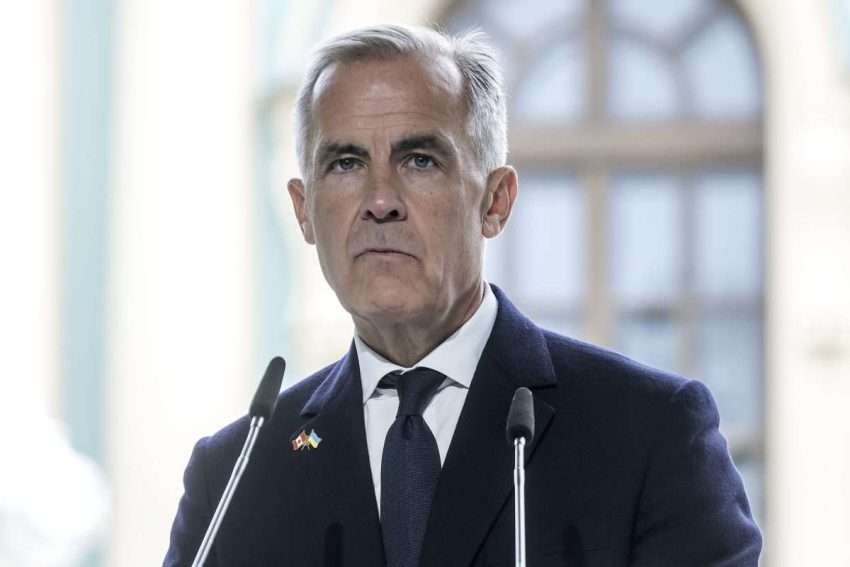
Photo: “We’re building Canada strong, because we’re strongest when we look after each other and when we ensure everyone has the chance to get ahead,” said Prime Minister Mark Carney.