
Squeezed at the pump, local drivers find relief in carpooling and public transit
By Gene Pereira, Local Journalism Initiative reporter
When David Wong was complaining to a friend about the brutal costs of his daily drive from Markham to his manufacturing job in Mississauga, he wasn’t expecting a solution to his problem.
His friend, though, had an idea. He knew another local resident making the exact same long-distance trek every single weekday.
A quick introduction later, Wong met Andrew Miller.
“It turned out we worked 15 minutes from each other, and our schedules worked out. We’ve been doing this since last November,” Wong said. “We realize, for this to work, we both have to be committed to showing up on time. We call each other if one of us is sick or if there is a change in plans.”
For Wong and Miller, what began as a temporary strategy to survive painful pump prices has evolved into a dependable daily routine and a lasting friendship.
Take a look around shopping mall parking lots during the weekdays, and you’ll notice more vehicles. Not shoppers, but instead those jumping into another vehicle and carpooling to work.
“We’ve become friends,” Miller said. “We’re thinking even if gas prices go down to what they were before, we may continue to do this because it just makes sense and saves us both money. I drive one week, and he drives the next.”
Stories like Wong and Miller’s are playing out across the Greater Toronto Area (GTA) as skyrocketing fuel prices force residents to reconsider how they get to work. Local gas prices have surged toward $1.85 per litre, with analysts warning they could soon cross the $2 per litre mark.
The surge is largely driven by severe ongoing global supply disruptions caused by the military conflict in the Middle East and the closure of the Strait of Hormuz—a crucial bottleneck through which roughly 20 per cent of the world’s petroleum passes.
“Gas prices are skyrocketing again,” Miller added. “They have also resulted in prices rising at the grocery store and for a lot of the other necessities we need. It’s crazy, and we have no control over them. There’s no telling how much it could climb if they don’t fully open the Strait.”
The pinch at the pump is sending ripple effects across local transportation networks. Beyond informal carpools, commuters are turning to public transit in record numbers. York Region Transit (YRT) reported a record 23.7 million riders in 2025, with specialized programs like On-Request services surging by over 15 per cent. Regional transit giant Metrolinx also recorded 71.9 million system-wide annual riders for its recent fiscal period as drivers park their personal vehicles in search of affordable alternatives.
Fewer individual cars on the road translates directly to reduced traffic congestion and lower carbon emissions—a win-win for both commuter sanity and the environment. Yet, regional leaders acknowledge that shifting drivers permanently out of their cars comes with significant infrastructure challenges.
Ward 1 Stouffville Councillor Hugo Kroon noted that dramatic price spikes often serve as a wake-up call for commuters to explore alternative travel options.
“Sometimes it takes a crisis for people to understand there are alternatives,” Kroon said. “If you live close together and work close together… sure if that works for you, but I wouldn’t count on it.”
Kroon emphasized that local government must focus on practical, incremental improvements to give residents viable transit options.
“Council’s responsibility is to continue to advocate on behalf of residents to get out a more robust transit system, which we’ve been doing,” he said. “Primarily, there are challenges in regards to that kind of service, but we’re working with the Region, we’re working on-demand services, upgraded buses. We’re still looking for complete double tracking for the GO Station into both our stations.
“It’s incremental improvements. That’s what we’re kind of focused on. We all feel the pain of increased gas prices, but I’m not sure there’s a whole lot that council can do on that front.”
A carpooling program isn’t on its way.
“I’m not driving people to Walmart,” Kroon added with a laugh.
Kroon pointed out that the biggest hurdle to mass transit adoption remains the “last mile”—connecting a rider’s front door to the nearest transit hub.
“If I worked down in the city, there is no way I would drive down there every day. I’d be taking the train or the bus, but we see what it costs to improve and to upgrade that infrastructure,” Kroon said. “Until those improvements work through the entire GTA, people are just going to have to make do with what they have. If, unfortunately, the only way you got to work is driving, let’s just hope the world situation sorts itself out and regular gas prices go back to the way they were.”
Municipal policy in York Region has long attempted to address these commuting hurdles. Programs like Smart Commute Markham, Richmond Hill—a workplace travel program delivered in partnership with York Region, Markham, and Richmond Hill—were designed specifically to connect employees with sustainable transit and ride-matching options. According to historical regional data, employees at Smart Commute workplaces were nearly 20 per cent less likely to drive alone to work compared to the average commuter.
However, despite these efforts, municipalities are re-evaluating whether third-party carpool initiatives offer true value for taxpayers. Markham council recently approved a final one-year funding extension for Smart Commute after reviews showed program participation dropped by nearly 16 per cent between 2020 and 2025.
Ward 5 Markham Councillor Andrew Keyes explained that while the city strongly supports public transit and active transportation like walking and cycling, suburban geography presents real limits.
“The city of Markham, from a policy perspective, is doing what we can to encourage more use of public transit. However, the 905 has its constraints,” Keyes said. “The distances are longer, and the transit frequency service is not what it needs to be yet. Part of it is, you can encourage them to take the bus, but they’re not going to take the bus if the bus is every hour. So, with carpooling, at least you have your own scheduling.”
Regarding Markham’s $75,000 annual funding commitment to Smart Commute, Keyes noted that council is questioning its overall cost-effectiveness.
“We’re trying to encourage carpooling,” Keyes said. “We’re just saying, is that organization giving value?”
Keyes pointed out that coordinating travel between co-workers has always been tricky—even dedicated HOV highway lanes set up by the province often sit underutilized because people’s schedules, night shifts, or unpredictable work hours don’t align easily.
“Getting people to commute together has always been difficult,” Keyes said. “Then it’s someone is late, and it becomes ‘where are you?’ So, yeah, it’s a challenge. I think you get used to it and you get into that routine… There might be a little bit of inconvenience. They might work somewhere 15 minutes from you, but, hey, it adds up in the end.”
For commuters like Wong and Miller, overcoming those minor inconveniences and setting a daily routine has made all the difference to their monthly budgets.
“We hear more and more people are taking advantage of this,” Wong said. “They meet at some mall, someone parks their car, and they head off to their respective jobs in one car.”
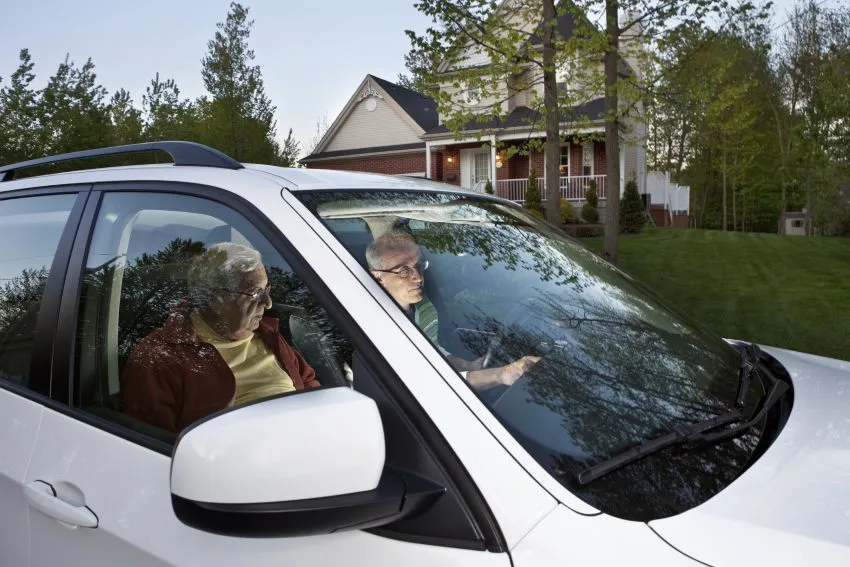
Photo: Carpooling stories are playing out across Markham, Stouffville and the Greater Toronto Area (GTA) as skyrocketing fuel prices force residents to reconsider how they get to work.