
Mapping out the patient journey
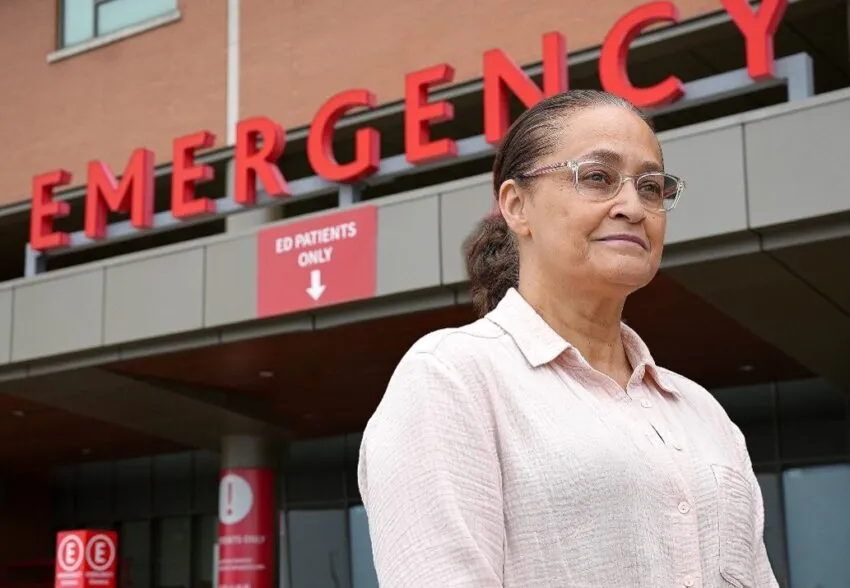
In May 2024, Nicki Morris came to the Emergency Department (ED) at Markham Stouffville Hospital (MSH) with severe and consistent burning pain and numbness in her leg. Needing answers, she came to the ED prepared, bringing X-ray and test results from her primary care provider.
“I felt like the doctor ignored my prior results and was somewhat dismissive,” says Morris. “I wasn’t asked many follow-up questions, and some of the questions I was asked didn’t seem to align with the symptoms and pain I had initially described.”
Her requests for treatment options and pain management were met with pushback. Eventually, she was given medication, but it only made her groggy. She felt her pleas for help were ignored. After spending hours in the ED, she was sent home with a referral for physiotherapy.
Throughout the evening, her pain and numbness worsened. By morning, it became so severe, she could not sit or stand, let alone walk. She called an ambulance and made her way back to the ED.
“Returning again the very next day, I was already feeling anxious,” says Morris. “I felt again as though my care team was dismissive of my concerns and perceived me as someone seeking drugs, rather than trying to get treatment for my pain. It was uncomfortable, but I knew I had to advocate for myself to get answers.”
However, during this second visit, her ED physician referred her to an orthopaedic surgeon, who admitted her, and over the next four days, ordered extensive testing, and was able to determine the root cause of her pain. The surgeon planned for a procedure, which completely resolved her pain and numbness. She was discharged and was able to walk pain-free.
Although she felt relief that her pain had been resolved, she couldn’t shake the feeling that her experience may not be unique. Drawing on her time working in health care and other public-facing roles, she felt a strong responsibility to speak up. She reached out to Patient Relations by email, hoping her feedback might help improve care for others.
“My experience stayed with me for a long time. The more I thought about it, the more I wondered if this is the reality many people in pain face when they come to the ED,” says Morris. “I felt like I was being viewed as a drug-seeker – and even if I had been, everyone deserves care and compassion. Health care professionals are there to help people, not dismiss them. For those struggling with addiction, they need support and treatment, not judgment.”
After learning about her experience, the Patient Experience team reached out to invite her to participate in a new patient journey mapping initiative underway at Oak Valley Health (OVH).
“Patient journey mapping grew from a desire to better understand the care we provide at OVH, through the eyes of patients, families and caregivers,” says Jill Shakespeare, Director of Strategy and Patient Experience. “While we regularly receive feedback through surveys, compliments, and complaints, patient journey mapping surfaces the nuanced thoughts, feelings, assumptions and perceptions of patients and caregivers, that often remain hidden, unknown, or misunderstood. It also allows us to surface the assumptions and experiences of clinical and support staff, and their intersections with patients and families. Mapping these experiences creates a visual that highlights critical junctures in a patient journey where small improvements can have big impact.
Her patient journey mapping experience was ultimately a positive one. Staff and physicians from several departments across OVH participated in the live mapping session where they were given a comprehensive walk-through of her journey through the ED. ED nurses, support staff, physicians, and leaders listened deeply to the nuanced ways that key moments of her journey had either positive or negative impacts on her care experience and reflected back to Morris, the needs and expectations they heard as she shared her story, and the key insights and understanding they gained from mapping her experience.
“The journey mapping process was extremely valuable as it provided an opportunity to step back and look at the patient and staff experience in driving quality care. In the ED, our teams are often focused on responding quickly to acute situations and managing patient volumes,” says Jade Gray, Patient Care Manager, Emergency Department. “Having the chance to directly hear from patients and staff outside of the care environment helped us to collaboratively identify both strengths and gaps in the care journey, and how every interaction impacts a patient’s experience.”
MSH’s ED was the first area at OVH to engage in patient journey mapping, with more mapping already underway, including hallway spaces. The goal is to ensure patient, family and caregiver voices and experiences shape the care we provide.
“The journey mapping process provided valuable insights into both the patient and staff experience, helping identify opportunities to improve care processes, communication, and overall patient experience in the ED,” says Kanwal Ali, Manager of Patient Experience. “The feedback and discussions informed the development of a comprehensive ED optimization tracker that includes short-, medium-, and long-term improvement initiatives. Many of these projects have already been completed, while others are currently underway in partnership with clinical and operational teams.”
Patient journey mapping creates a focused and shared understanding of what shapes patient experiences, and informs ongoing improvements grounded in staff and provider realities and guided by the authentic and unfiltered lived experience of diverse patients, families and caregivers.
Photo: Former MSH patient Nicki Morris.
*Story submitted by Alanna Sloan.