
Stouffville credits careful spending as town records $12.4-million year-end surplus
By Gene Pereira, Local Journalism Initiative reporter
Stouffville completed 2025 in a strong financial position
The town posted a $12.4-million budget surplus, giving it additional flexibility to manage future tax pressures while investing in critical infrastructure and community priorities.
Under Ontario legislation, municipalities are required to balance their operating budgets each year. As a result, any year-end surplus must be transferred into reserve funds rather than spent freely. Stouffville’s 2025 surplus has now been allocated into several reserves designed to protect taxpayers from future financial pressures and ensure funding is available for long-term capital needs.
“It just goes to show that our staff is working very well within the limits of the budget and finding savings wherever they possibly can to the advantage of the taxpayer, and council certainly applauds their efforts,” Ward 1 Stouffville Councillor Hugo Kroon said.
Council directed $1.37 million into the Tax Rate Stabilization Reserve, $1.02 million into the Rehab and Replacement Reserve to support road safety initiatives, $500,000 into the Winter Maintenance Stabilization Reserve and $474,700 into the New Infrastructure Reserve.
The town’s financial performance in 2025 also played a major role in shaping the $119-million 2026 budget. The surplus allowed Stouffville Council to pause the municipality’s annual three per cent capital levy increase, helping limit the municipal portion of the property tax increase to 3.5 per cent, or approximately $80 for the average homeowner.
At the same time, the surplus strengthened the town’s ability to fund major infrastructure projects through its capital reserves.
The 2026 budget includes $36.3 million for capital investments, including the $18.5-million multi-phase reconstruction of Main Street, $1.5 million to complete the Stouffville Rouge Trail gap, $475,000 for construction of the new Busato Parkette, $200,000 for roof repairs at the Ballantrae Community Centre and $175,000 for restoration work at the historic Museum Barn.
According to the town’s year-end financial report, revenues increased during 2025 through automated speed enforcement cameras, facility rentals and property tax growth. Expenses also rose during the year, particularly for winter maintenance and operating the automated speed enforcement program.
While the overall accounting surplus totalled $12.4 million, the town also recorded a $3.37-million operating surplus. Much of that was driven by the automated speed enforcement program, which generated a surplus of approximately $1.5 million.
Kroon said annual tax increases are an expected reality for municipalities, but maintaining healthy reserve funds helps offset those concerns by preparing the town for future challenges.
“We have a tax increase every year, which, unfortunately, is expected,” he said. “I don’t want to call it bad, but I think that is offset by the good news of surpluses, which we obviously put into a fund for a rainy day, so to speak, as opposed to just finding ways to spend it.”
Kroon said reserve funds give the municipality a financial cushion when unforeseen events arise, rather than encouraging unnecessary spending.
“I’m very happy the staff manages to work within the budget and makes surpluses and allows us to plan for when the days aren’t so good,” said the Ward 1 Councillor. “So, we have a bit of a buffer when projects come up. Again, I don’t see it as a huge problem. Successive incredibly large surpluses are problematic, but that’s not the situation that we’re in right now.”
He added that while the dollar figure may appear significant, it represents prudent fiscal management in the context of the town’s overall finances.
“It’s easy to say it’s a big surplus, but in the scheme of things, it’s not, but like they say, it’s good to be on the black side of the ledger as opposed to the red,” Kroon explained.
Kroon emphasized that municipalities cannot simply create new projects because surplus money is available, noting reserve funds exist to help weather unexpected circumstances.
“We just can’t create a project that we can spend the money on,” he said. “It’s hard to anticipate when there’s problems, and, obviously, COVID was a perfect example. It was something that was completely out of our control, which impacted our ability to continue to pay for the programming, which had been approved in the budget.”
It’s nice, said Kroon, to have a buffer for exactly those things.
“Because we have a budget surplus, and we have some money laying around, it doesn’t mean we’re just going to create a project to spend money on,” he said.
Looking ahead, Kroon said the town’s approach over the past several years has been to balance investment with fiscal responsibility.
“Our council for the last eight years, and our staff, have been very good at anticipating these kinds of things and have been respectful when it comes to spending the taxpayers’ money,” he said.
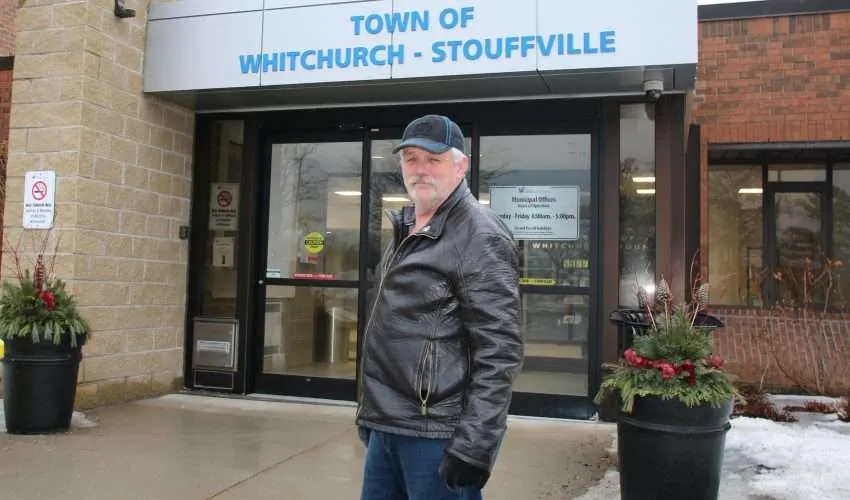
Photo: “I’m very happy the staff manages to work within the budget and makes surpluses and allows us to plan for when the days aren’t so good,” said Ward 1 Councillor Hugo Kroon.